In a nutshell
- One driver, one passenger per sled. You'll swap roles halfway through the 6 km route, so both of you get hands-on time commanding the team.
- The brake is your foot lever; the snow anchor is your backup. You'll learn both before departure so you can control speed and stop safely on the trail.
- Instruction covers basic commands, how to hold the reins, and what to expect. Staff show you the mechanics on the ground before the huskies pull out.
- At the halfway point, passenger and driver change places. No standing around in the cold - the transition happens smoothly so everyone drives roughly equal distance.
- You control the sled, not the dogs. The huskies follow the trail and respond to your voice commands, but you steer, brake, and pace the journey yourself.
What Self-Driven Actually Means
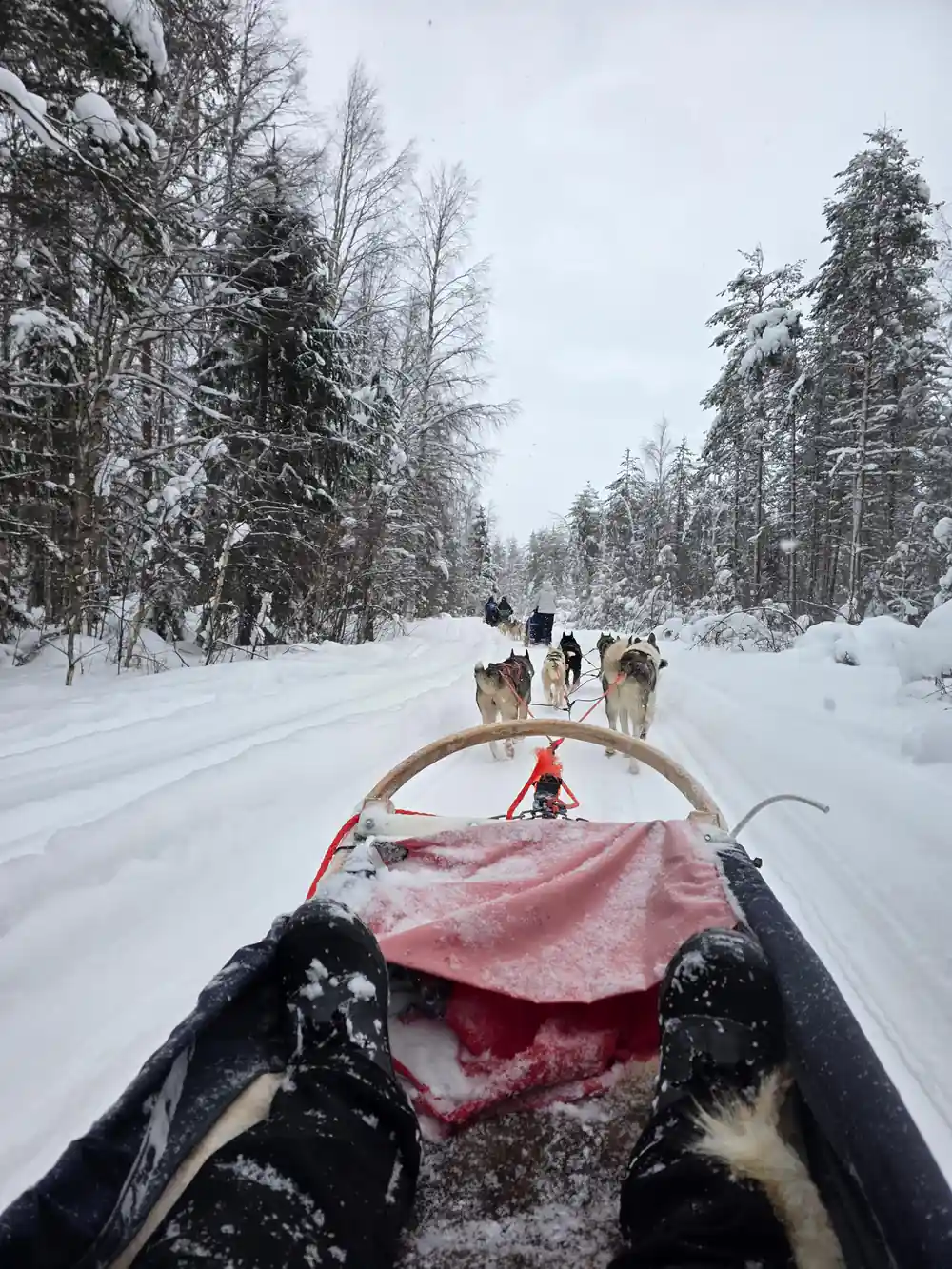
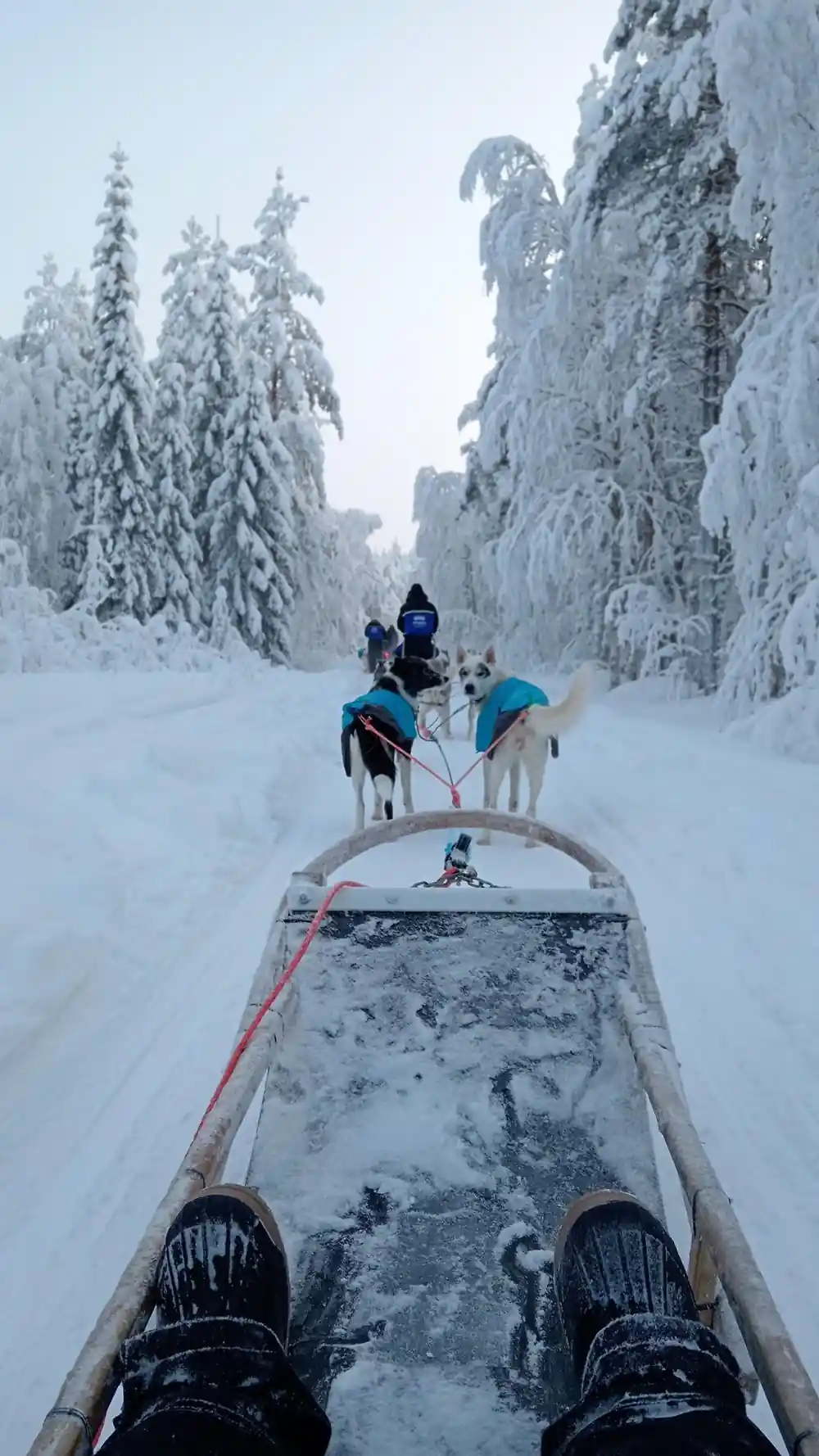
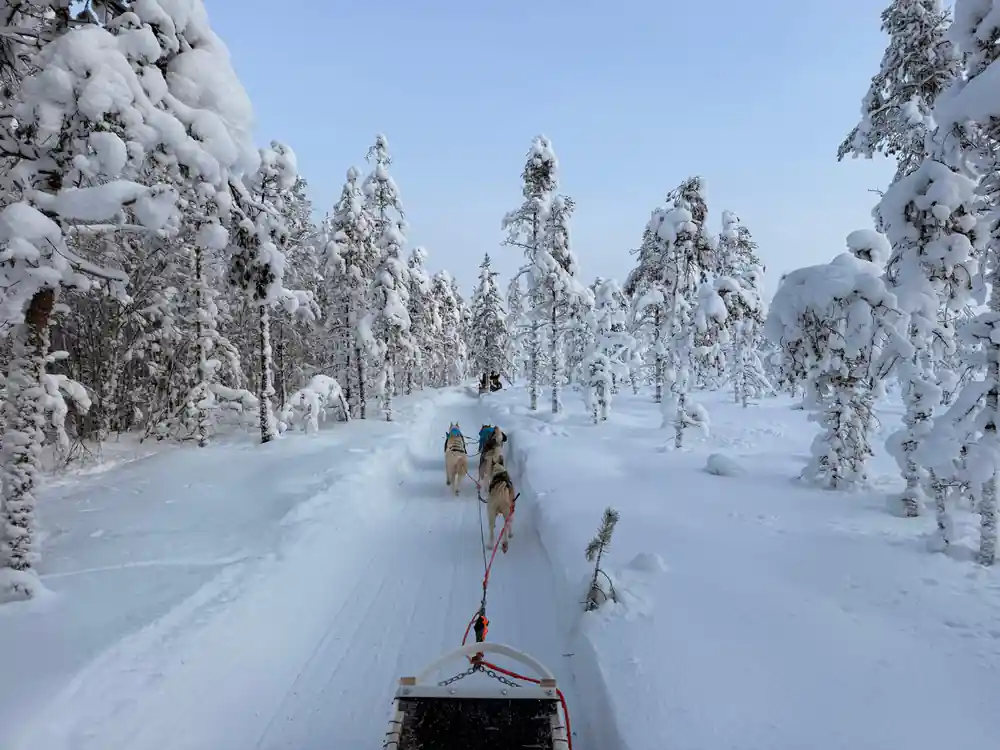
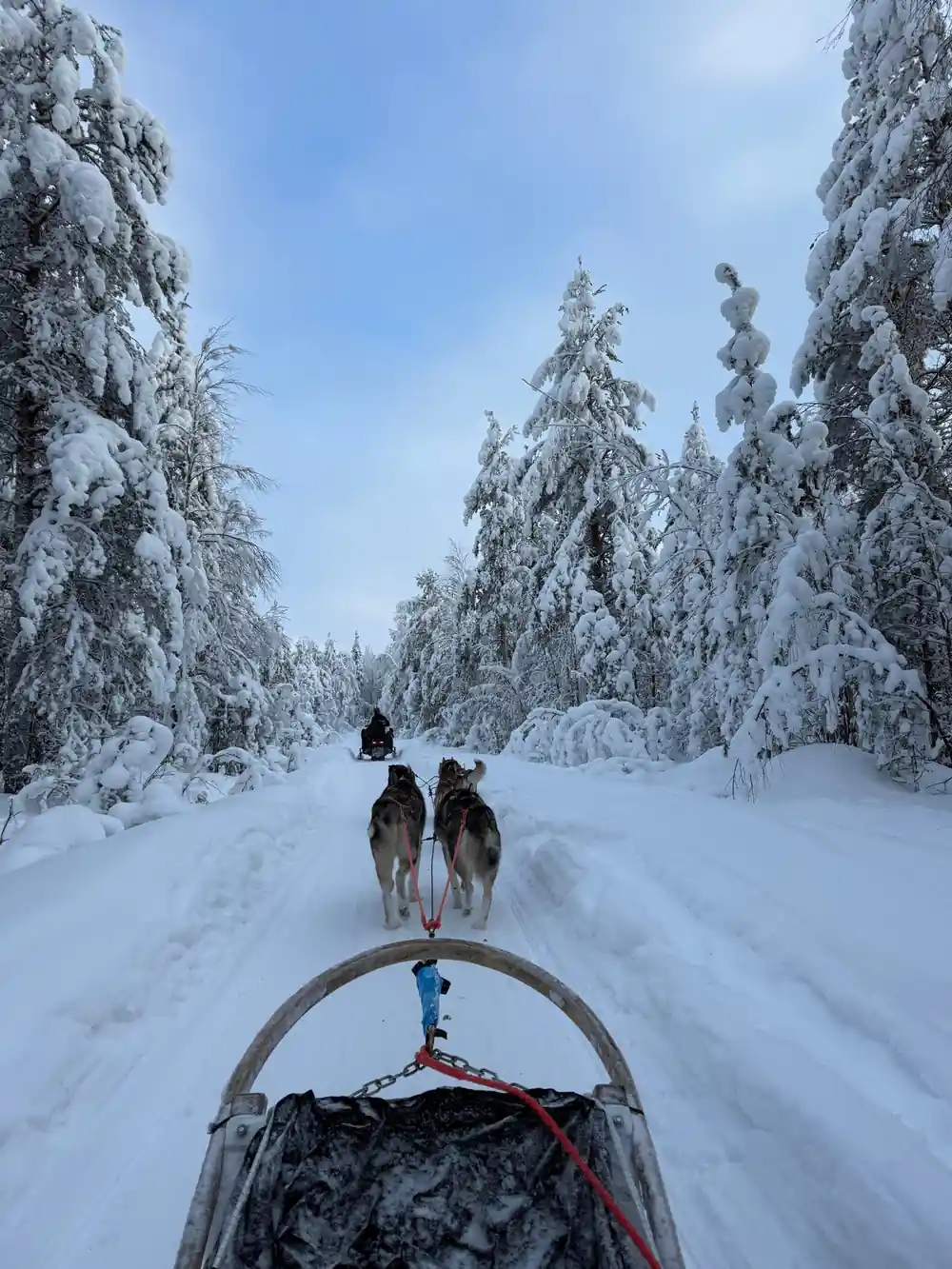
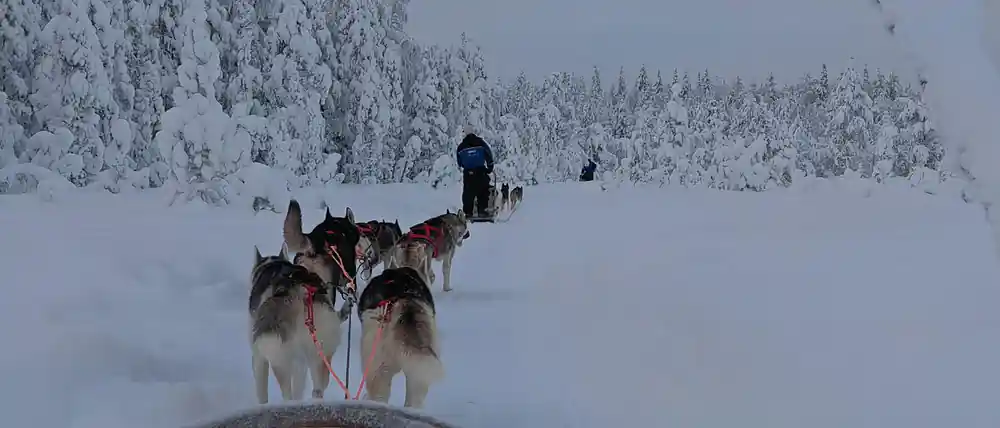
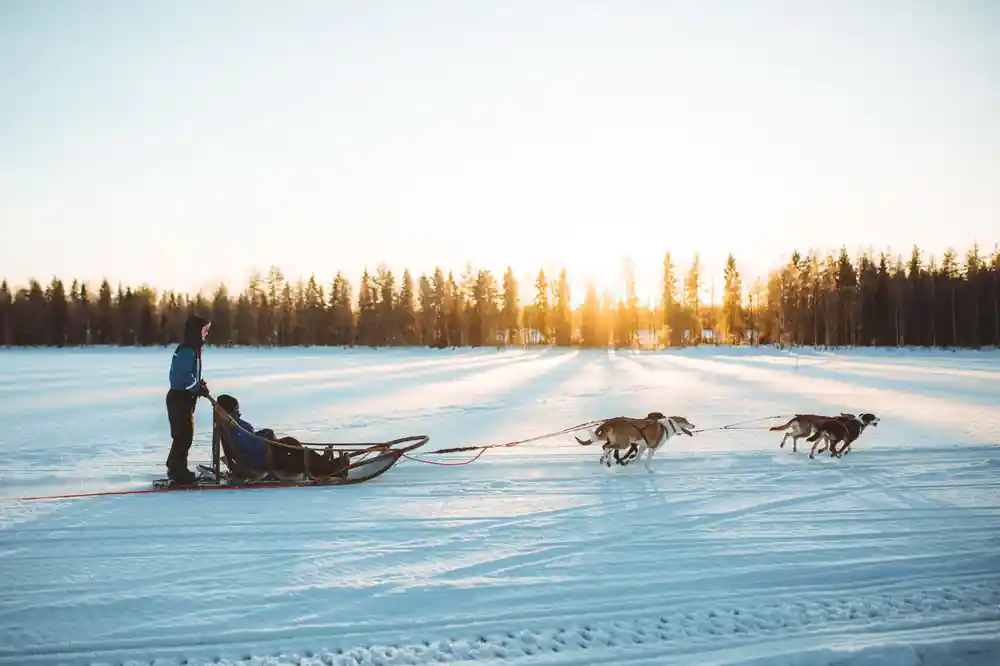
When you book the Apukka husky adventure, 'self-driven' means you stand on the runners, hold the driving bow with both hands and work the brake yourself, behind a team of huskies across 6 kilometres of Finnish snow. You are in command of the sledding experience, not a passenger watching from behind a musher. The dogs respond to your voice and your handling of the sled, making this fundamentally different from a tour where a guide does the driving. This is active participation: you learn the technique, you execute the maneuvers, and you feel the direct connection between your decisions and the team's movement.
Before you start, you receive instruction on the basics. The Apukka team walks you through how to stand, how to hold the lines, what commands the huskies recognize, and how to use the brake and snow anchor. Most people have never driven a dog team before, and the guides account for this. You are not expected to arrive as an expert. The session is designed so that someone with no prior sledding experience can step onto a sled and operate it safely over the three-and-a-half-hour tour.
Using the Brake Bar and Snow Anchor
The brake bar is your primary tool for controlling speed and stopping your sled. It sits at the back of the sled frame, and you engage it by pressing down with your foot or shifting your weight backward. When you apply pressure to the brake bar, metal claws underneath dig into the snow, creating friction that slows the team. On gentle terrain, light pressure is enough. On steeper sections or when you need to stop completely, you press harder. The sensation takes a few minutes to calibrate: too timid and the sled drifts; too aggressive and the huskies feel the sudden deceleration and may become confused about the signal.
The snow anchor is your backup. This is a metal tool you deploy by pulling a cord or handle, and it drives deep into the snow to hold the sled in place when you are stationary. Use the snow anchor when you stop at the halfway point to swap driver and passenger roles, or if you need to secure the sled while you attend to the dogs. Never rely on the brake bar alone to keep the sled from moving if the team is still harnessed and alert. The anchor ensures the huskies cannot pull away while you are distracted.
Commands the Huskies Respond To
Apukka's huskies are trained to respond to a small set of verbal commands. The most essential is 'hike,' which tells the team to start moving or to maintain momentum. You say it with clear, confident intonation. 'Gee' directs the team to turn right, and 'haw' sends them left. These commands are standard in husky sledding across the Arctic, and the dogs at Apukka know them well. If you shout them sharply and clearly, the team will respond within a few strides.
There is also 'whoa,' which signals the team to slow down or stop. Some mushers add a whistle to their commands for emphasis, particularly on longer straightaways where the dogs might drift or lose focus. The dogs are not robotic: they have personalities and energy levels, so your tone and timing matter. A confident, deliberate command works better than uncertain shouting. You will practice these calls during your initial briefing, and the guides will correct your technique if needed before you head out onto the trail.
How the Driver and Passenger Swap Halfway
Roughly halfway through the 6-kilometer journey, the tour stops at a designated rest point. Here, driver and passenger change places. The person who has been holding the reins steps off the sled, and the passenger takes the driver's position. This swap allows both participants to experience the full challenge of controlling the team. The guides secure the sled using the snow anchor and brief the new driver on any terrain or conditions coming up in the second half of the route.
The transition happens smoothly. There is no dismounting required mid-run; you stop in an open area where the sled is stable and the huskies are calm. The switch typically takes five to ten minutes, including a moment to catch your breath and adjust your grip before heading out again. If one person is significantly more confident or stronger than the other, you can ask the guides whether a different arrangement might work better, though the standard format assumes both participants want equal time in control.
40 km
A typical husky team reaches speeds of 20 to 40 kilometers per hour across the snow.
What Happens if the Sled Tips or You Fall
Sled tipping is rare, but it can happen on sharp turns or uneven terrain, especially if you lean the wrong way or fail to lean into a curve when the dogs bank hard. If the sled tips, you will likely find yourself in deep snow beside the sled and the team. The huskies are trained not to panic; they do not bolt when a sled goes over. Instead, they typically slow or stop, waiting for you to right the sled and regain control. Falling off is more common than tipping, and it usually occurs when you are not expecting a sharp turn or when the dogs accelerate suddenly.
If you fall, the same principle applies: the huskies are conditioned to remain calm and not race away. Your role is to get back on the sled as quickly as possible, reset yourself, and continue. The guides are watching and will assist if you need help righting the sled or if you are injured. The terrain is snow, so most falls are cushioned, but you should wear the winter clothing provided, including thermal overalls and boots, to protect yourself from cold and impact. Do not try to grab or restrain the dogs if they are harnessed; let them settle naturally while you focus on the sled.
Guide Supervision Along the Trail
Guides do not ride on each individual sled, but they are present throughout the tour. They travel with the group, typically positioned ahead and behind to monitor progress and watch for any issues. As you drive your husky team over the 6 kilometers, the guides observe your technique, your handling of the brake and snow anchor, and your communication with the dogs. If you are struggling or heading toward a mistake, they will intervene with instruction or assistance. This is not a completely solo experience; you are being supervised by experienced mushers who know these routes and these dogs.
The guides also manage the logistics of the tour: they direct the group along the correct paths, ensure the halfway swap happens on schedule, and handle any equipment problems or medical needs. They carry communication devices and are trained in wilderness first aid. You are never so far from help that an issue becomes dangerous. The supervision model means you get real-time coaching while still being responsible for driving your own sled, which balances independence with safety.
Speed and Physical Demands
A husky team at Apukka typically travels at a trotting pace of 8 to 15 kilometers per hour, depending on terrain and snow conditions. This is faster than walking but not so fast that the experience becomes terrifying for beginners. The sled does not accelerate suddenly unless the dogs are spooked or you give them a strong 'hike' command; most of the time, they settle into a steady rhythm. On flat sections, the ride is smooth. On slight inclines, the dogs slow naturally, and you can help them with the brake if needed. On descents, you manage the speed by pressing the brake bar.
The physical demands are moderate but real. You are on your feet for much of the outing, though the driving itself comes in a stretch of roughly fifteen minutes before the swap. Your legs do the balancing work, and your arms manage the lines and brake. If you have back or knee issues, standing for this duration may be uncomfortable. There is no weight limit stated for this tour, and fitness requirements are not formally listed, but you should be able to stand without support for extended periods and have reasonable upper-body strength to hold and guide the reins when the dogs pull hard. The inclusion of thermal clothing means you stay warm throughout.
Ready to take the reins? First-timers drive every time
from US$253Reserve now & pay later
Briefing
Learn the basics before you drive
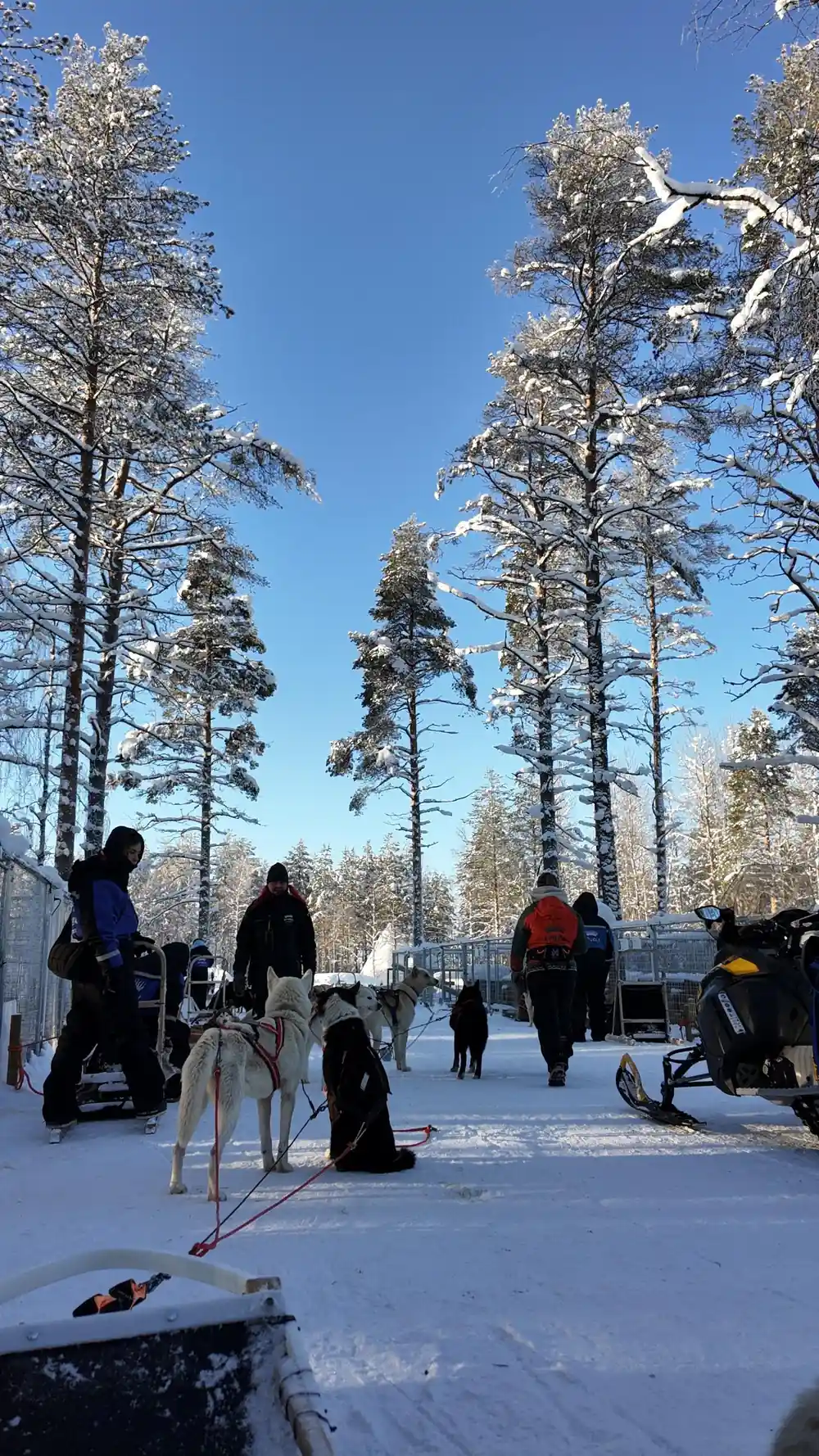
Your guide covers commands, brake use, and snow anchor deployment. Ask questions about what lies ahead.
You and your passenger board the sled
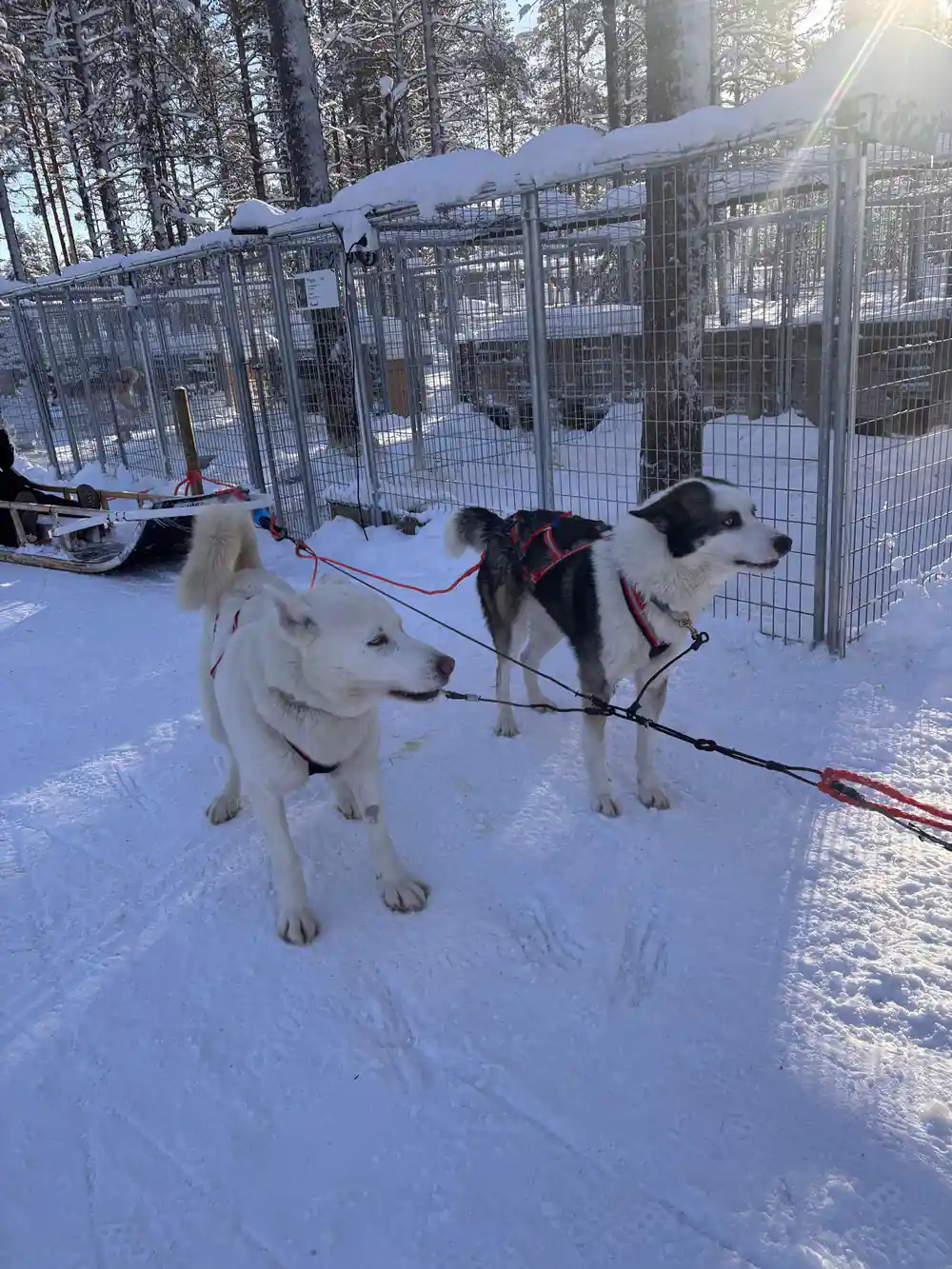
Driver stands at the rear on the runners. Passenger sits in front. Huskies are harnessed and eager to move.
Remove the snow anchor to start
Once you lift the anchor, the team accelerates. Use voice commands to guide them left and right on the trail.
Brake and command on the winter route
Press the brake pad with your boot to slow down. The dogs respond to steady, clear commands throughout the ride.
Switch positions at the halfway point
The sled stops. Passenger moves to the rear to take the reins. Driver sits down for the return leg.
Brake to a stop back at Apukka
Apply full brake pressure as you approach the resort. Your guide secures the sled and huskies after the ride ends.