In a nutshell
- Husky sledding runs November through March. Peak snow reliability falls December to February, when Arctic conditions lock in.
- Expect minus 10 to minus 20 Celsius. Thermal clothing is provided, but your face and exposed skin feel the bite of the wind during the 6 km ride.
- Northern lights are never guaranteed. December and January offer the longest dark hours, improving chances, but clear skies and solar activity matter most.
- Winter daylight is scarce. Morning rides see grey twilight; afternoon runs end in near darkness. Both seasons shift the forest mood entirely.
- Real-time conditions at the location reveal snow depth, wind speed, and visibility. Check the forecast before you book to see what the day will truly hold.
Husky season in Rovaniemi: November to March
The husky ride Rovaniemi operates reliably from November through March, when snow blankets the Finnish landscape and temperatures drop enough to keep trails frozen solid. November marks the beginning of the season, though early weeks can be unpredictable as the first snow settles. By December, conditions stabilize and the season is in full swing. January and February offer the most consistent snow depth and coldest temperatures, making them ideal months for sledding. March still delivers good sledding, though daylight increases rapidly and warmer afternoons can soften trail surfaces. Plan your visit within this window to guarantee snow underfoot and safe running conditions for the huskies.
Starting your husky ride Rovaniemi in October is not viable, as autumn temperatures in Finnish Lapland rarely produce lasting snow. The ground remains bare, and the huskies are typically in training rather than active tour rotation. Winter does not reliably arrive until late October or November. If you are set on an autumn visit, check directly about availability, as tours depend entirely on natural snow cover.
Standing on the runners: windchill and what thermal gear does
Standing on the back of a husky sled exposes you to wind that amplifies the cold dramatically. Even on a calm day at minus 10°C, the breeze from movement and the still Arctic air combine to create a windchill that bites exposed skin. This is why thermal clothing is non-negotiable. Your outfit includes a full thermal overall (one-piece suit), insulated thermal boots, woolen socks, and mittens. These layers trap body heat and shield you from wind. The boots are particularly crucial because your feet remain stationary on the runners for the entire 6 km journey, making them vulnerable to numbness without proper insulation.
The mittens keep your hands warm while holding the sled rope lightly, and the thermal overall covers your legs and torso, which bear the brunt of windchill. Even with this gear, you will feel the cold; it is an Arctic experience, not a tropical one. Most riders find the cold invigorating rather than painful when properly dressed. Apukka provides all required winter clothing, so you arrive in regular clothes and change into the thermal suit on-site. This means you do not need to purchase specialized gear or arrive wearing layers that make changing uncomfortable.
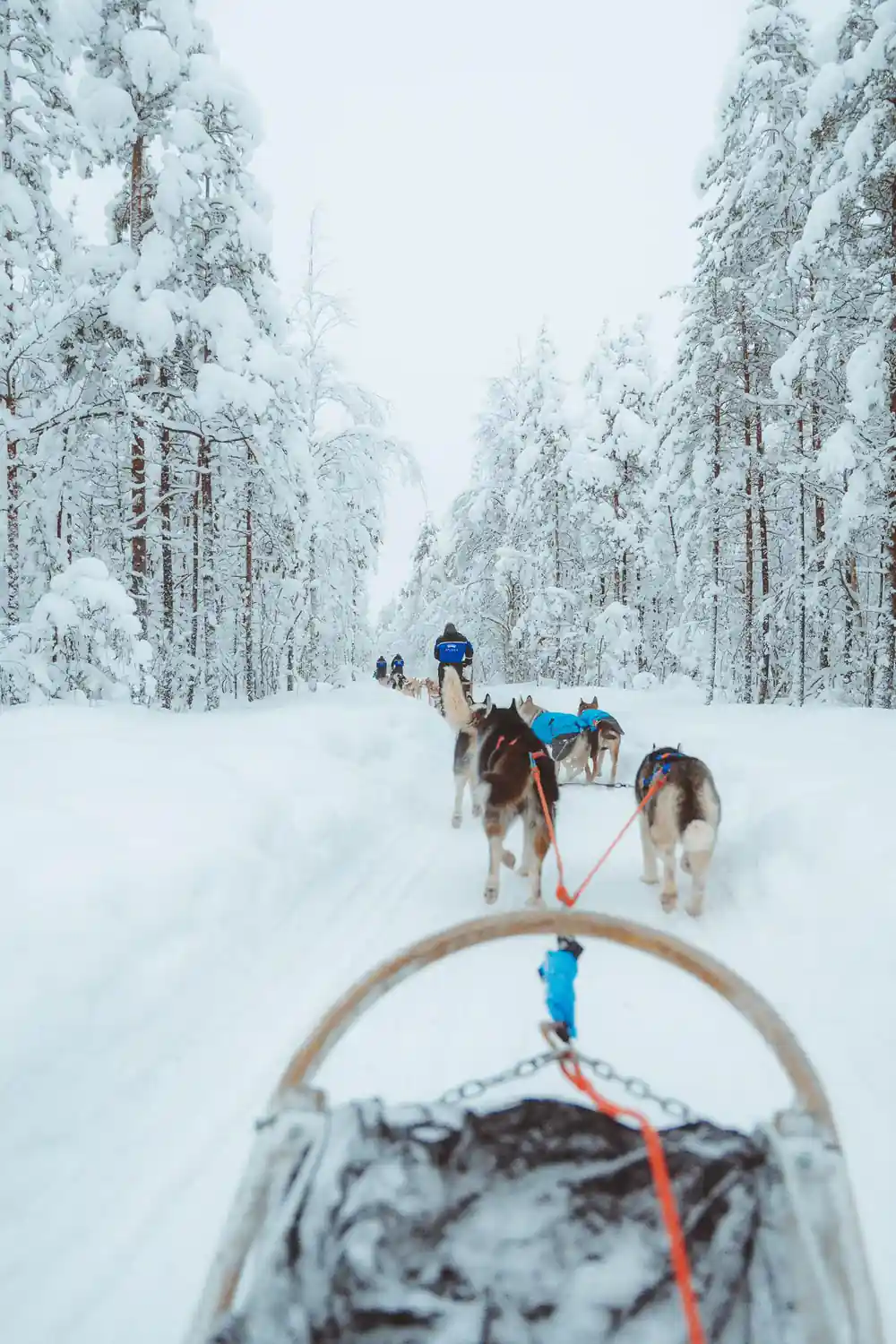
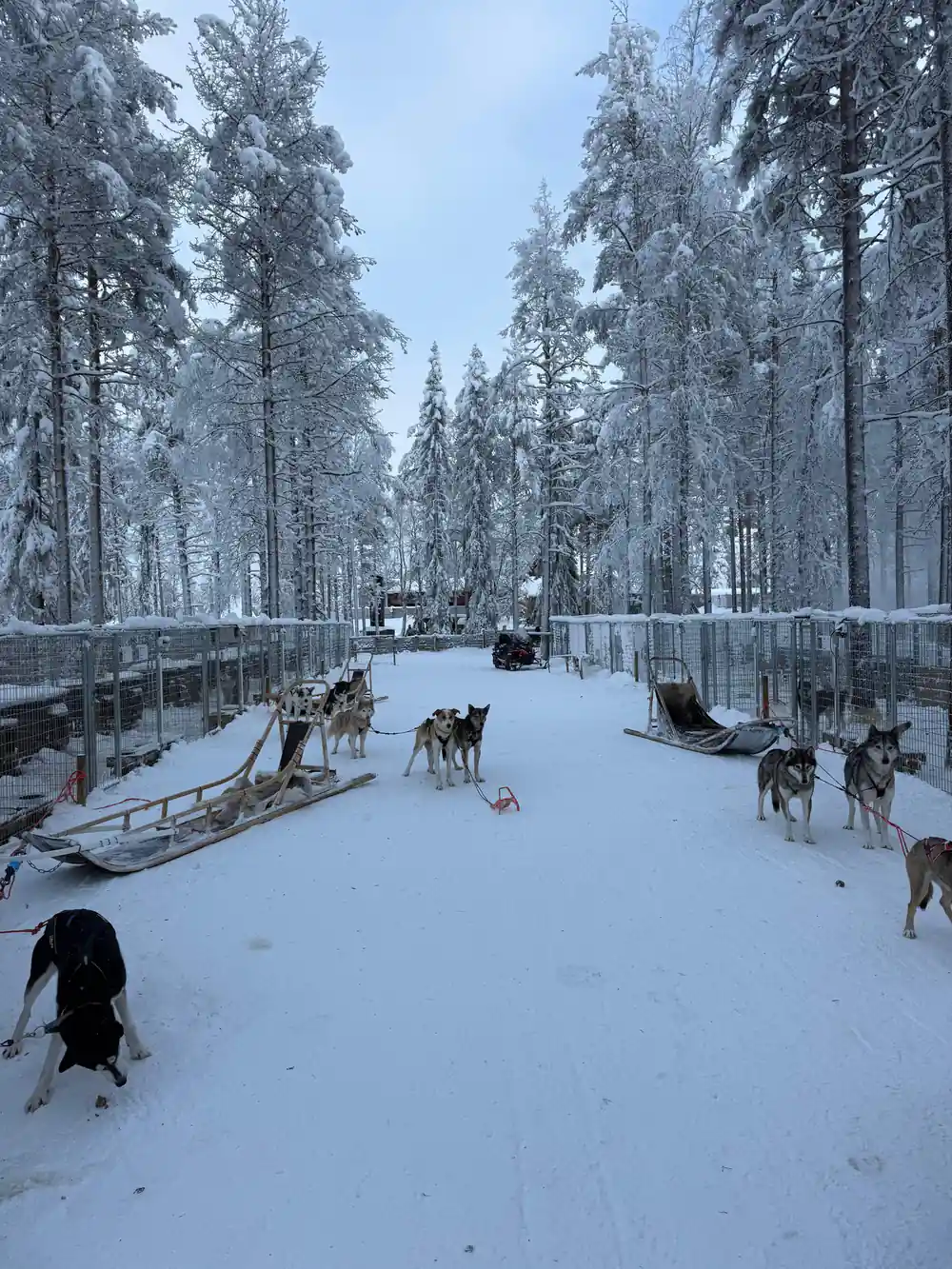
Forest trail glowing under Arctic twilight before the sled ride
Month-by-month snow reliability from November to March
November snow is inconsistent. Early November can see bare ground in Rovaniemi, though the landscape transforms once snow arrives. Late November typically sees reliable snow cover, but depth may vary. December delivers excellent snow, with fresh falls common and depth building to 15-30 cm across the trail network. This is when conditions are most forgiving for newcomers. January and February are the peak months, with deep, stable snow and minimal thaw. Trails are well-packed, and fresh snow events keep surfaces ideal for both speed and traction. March snow can slump on warmer afternoons but typically remains solid through morning rides.
For the most dependable snow underfoot, book your sledding adventure between mid-December and late February. These months have the lowest chance of encountering thin coverage or slushy trails. If you must travel in November, aim for late November and accept that conditions may require last-minute adjustments. March is viable but ask Apukka about current conditions when booking, as afternoon temperatures above freezing can soften surfaces and shorten the ride distance.
Morning light versus afternoon darkness in Arctic winter
The timing of your ride transforms the entire experience. In November, the sun barely clears the horizon, and both morning and afternoon rides occur in twilight. By December, daylight shrinks further; morning rides capture a few hours of weak sunlight, while afternoon rides happen almost entirely in darkness. January is dark but not polar night: Rovaniemi's kaamos lasts only a couple of days around the December solstice, and by early January the sun is up from about 11am to 2pm. February sees the first real light return, with mornings growing brighter by week. In March, days are genuinely light, and you will experience full sledding under daylight conditions.
If you want to see the forest and terrain clearly, book a morning ride in December, February, or March. If you prefer sledding under the stars and darkness, any January date works beautifully, or choose an afternoon slot in November or December. Morning rides in these darker months offer dim twilight, which many find atmospheric and romantic. Afternoon rides are progressively darker as winter deepens. There is no bad choice, only different experiences.
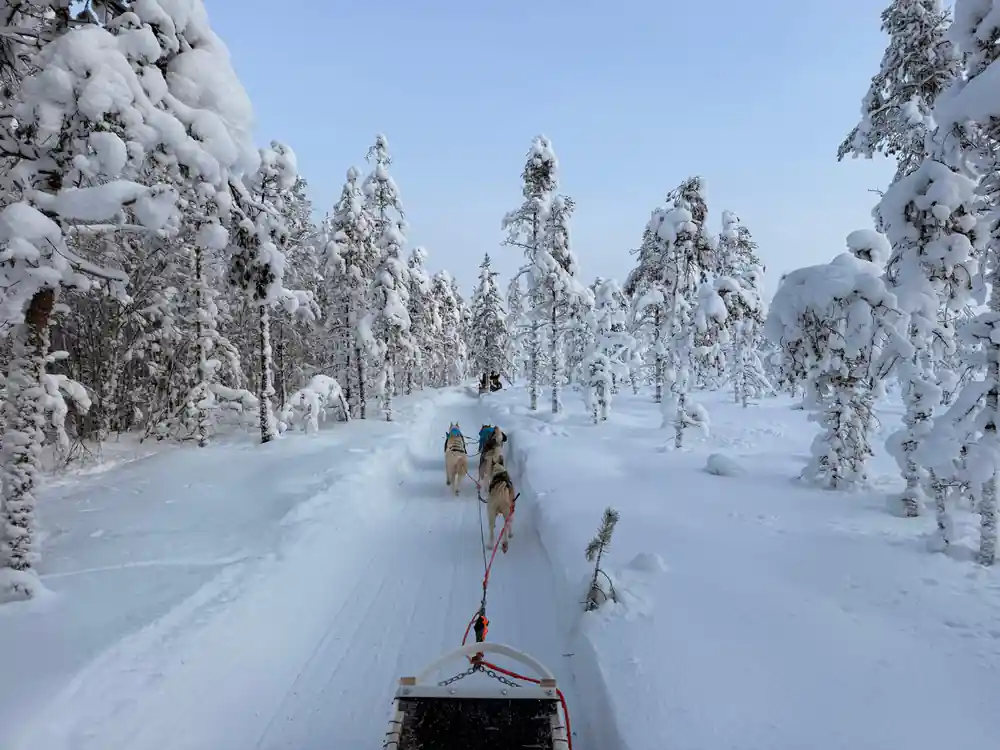
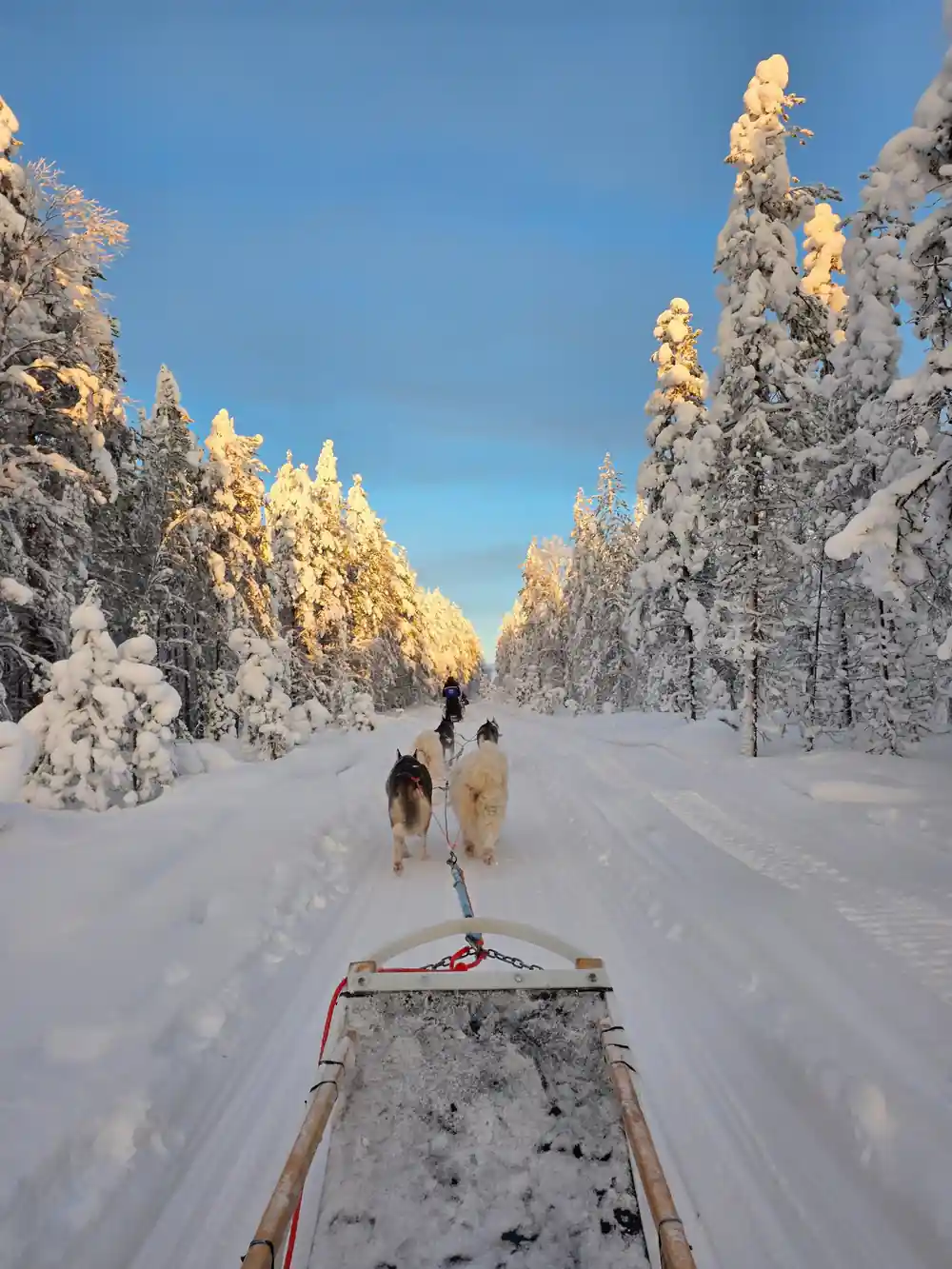
Polar twilight: how Arctic light colors the winter forest
In the weeks surrounding late November and early December, Rovaniemi enters a phase called blue hour or polar twilight, where the sun dips below the horizon but still illuminates the sky with deep blue and purple hues. This is not quite darkness and not quite day. The forest appears in shades of silver and indigo, and snow reflects the twilight, creating an otherworldly landscape. The effect is most pronounced in the afternoon, when the weak sun has already set but its glow lingers. This colored light lasts for hours, not just minutes, as it does in southern latitudes. It is one of the most visually distinctive aspects of a winter husky ride Rovaniemi.
By January the days are short but the sun still rises, and outside those few hours the forest is dark, lit only by stars and aurora if conditions allow. In February and March, twilight returns and gradually lengthens each day. If you want to experience polar twilight, visit in late November or early December and choose an afternoon ride. The ethereal blue forest and the contrast between snow and sky create a landscape that feels utterly removed from normal experience.
Northern lights and the possibility of aurora during your ride
Sledding under the stars on a clear night in winter can coincide with aurora activity, though sightings are never guaranteed. Aurora occurs when solar wind interacts with Earth's magnetosphere, and Rovaniemi is well-positioned to see it, but the phenomenon is unpredictable. Clear, dark skies are essential, which means midwinter (December through February) offers the longest nights and best opportunities. January is the peak darkness month, giving maximum time for aurora to appear if conditions align. A morning ride in January or February offers dark enough skies for aurora if it is active that night.
The aurora season runs from September through March, but visibility is strongest from November to February when darkness is longest. If aurora is your primary goal, book a clear night in January and choose an afternoon or evening time slot. However, plan your husky ride Rovaniemi as a guaranteed adventure, and treat northern lights as a potential bonus rather than an expectation. The tour itself is thrilling regardless of aurora activity.
Booking your ride: the best season window
The optimal window for a husky ride Rovaniemi is mid-December through late February. Snow is deep, temperatures are reliable, darkness is pronounced enough for atmosphere without being completely disorienting, and aurora is possible on clear nights. Within this window, choose your time based on preference: December for twilight colors, January for full darkness and maximum aurora potential, February for returning daylight alongside winter reliability. If you prefer to see the landscape clearly, book a morning ride in February or March. If you want to experience sledding under the stars, choose any date from December to February and request an afternoon slot.
Book at least two weeks in advance to secure your preferred date and time. The 3h30 duration includes transfer time, so plan the full morning or afternoon for the experience. Apukka handles all thermal clothing, so arrive in regular winter clothes and change on-site. Bring a camera to document the forest, the huskies, and any aurora that may appear. The 6 km journey covers enough distance to feel like a genuine adventure while remaining manageable for first-time sledders.
Ready? Book your husky adventure today
from US$253Reserve now & pay later