In a nutshell
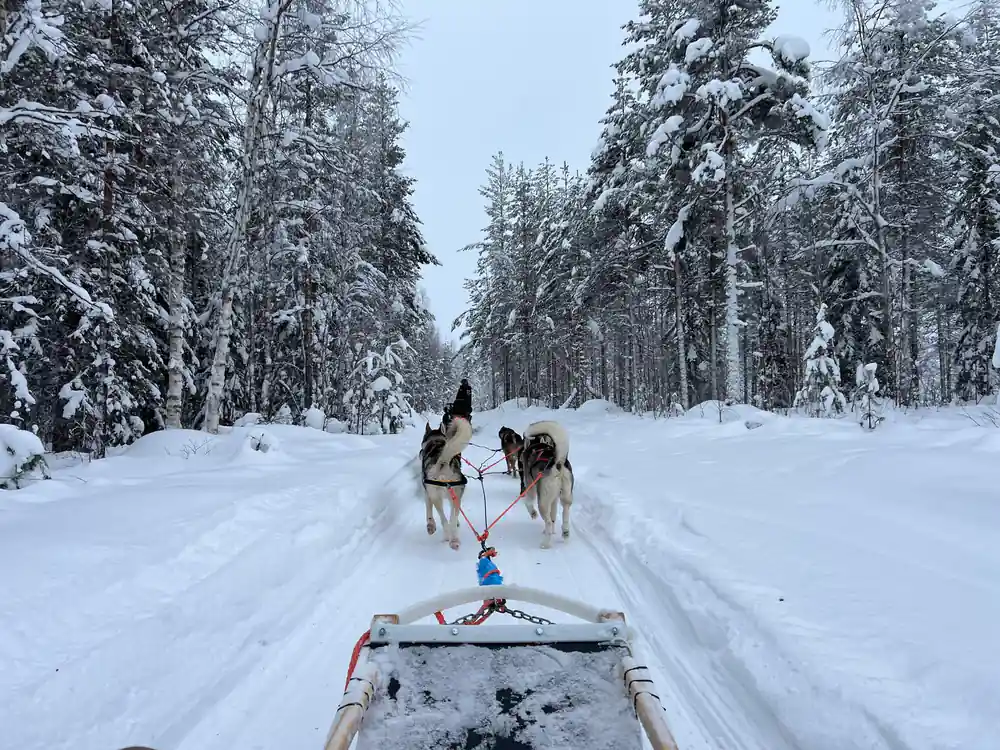
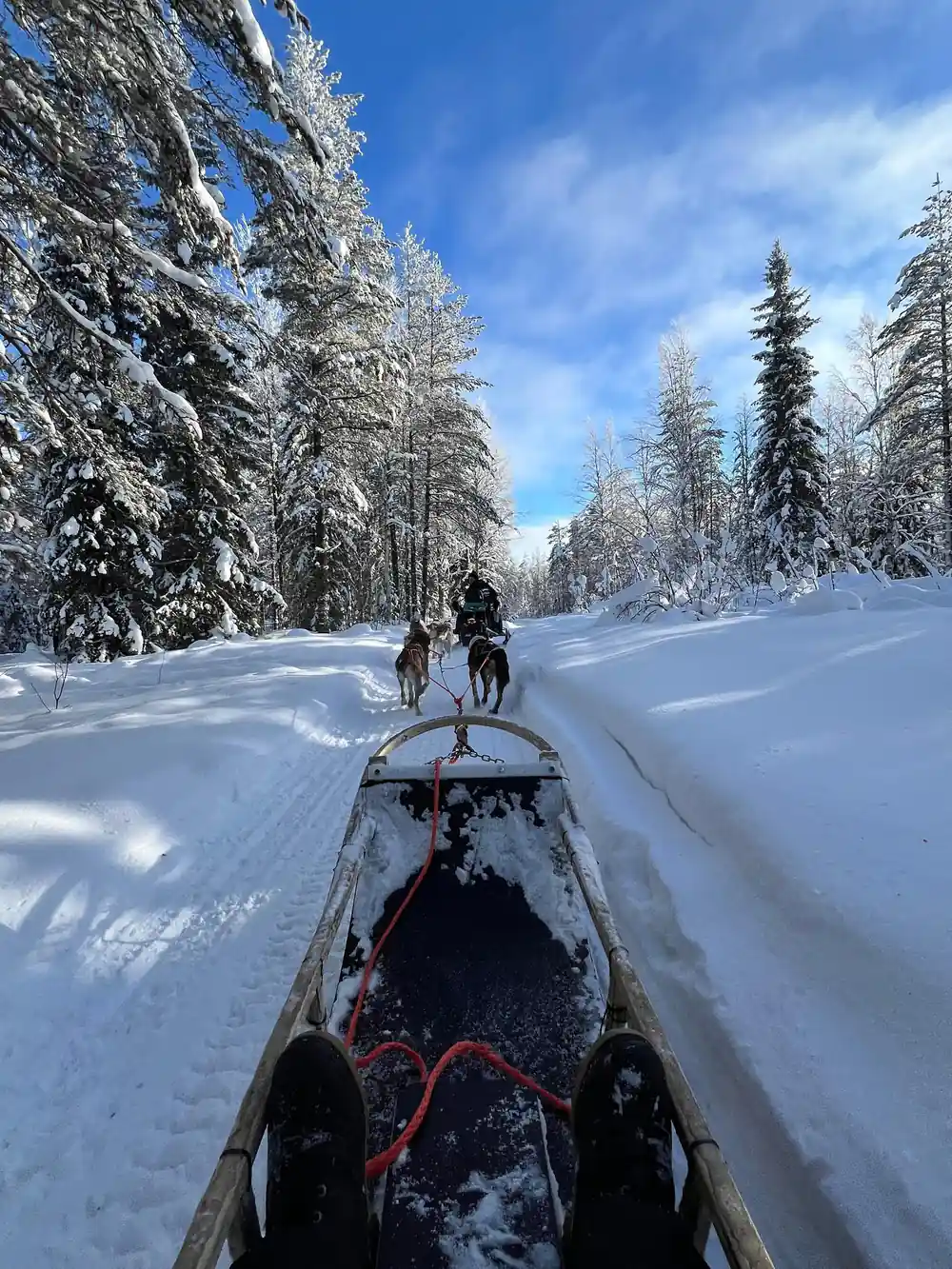
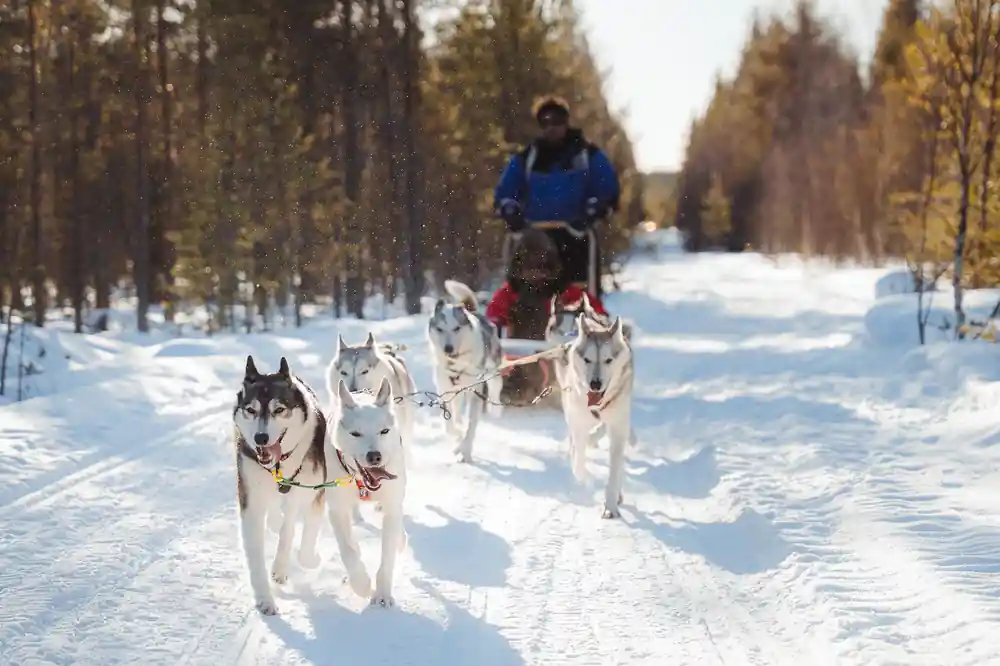
- Husky sleds are built low and stable. Most riders stay seated throughout the 6 km route. The team is trained to respond to commands and stop when needed.
- Experienced handlers ride at the front and back of the group during your adventure, monitoring all teams and ready to assist if anything goes wrong on the trail.
- You control your team with voice commands and foot brake. Guides can also stop the sleds. If you need to pause or exit mid-route, the team responds immediately.
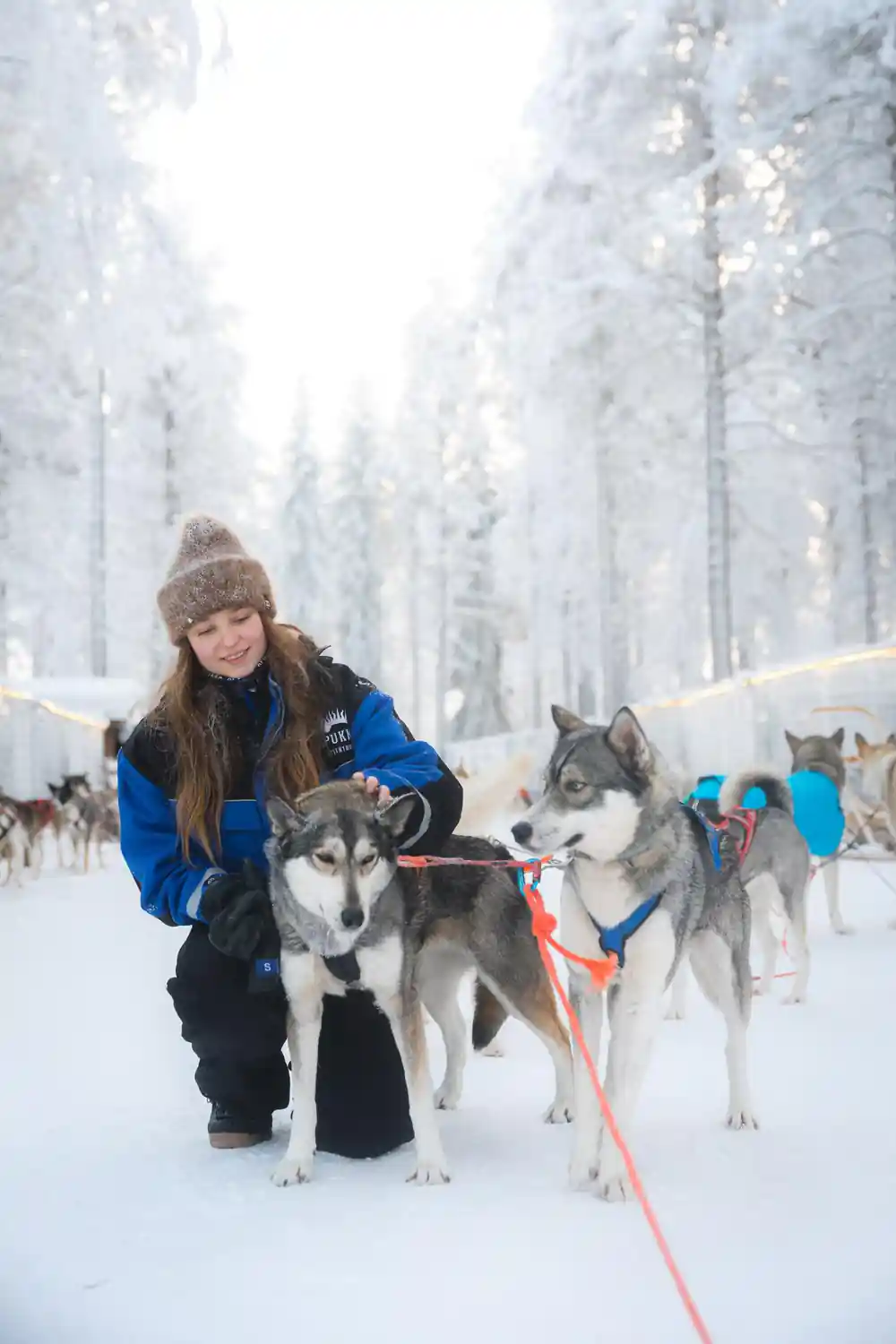
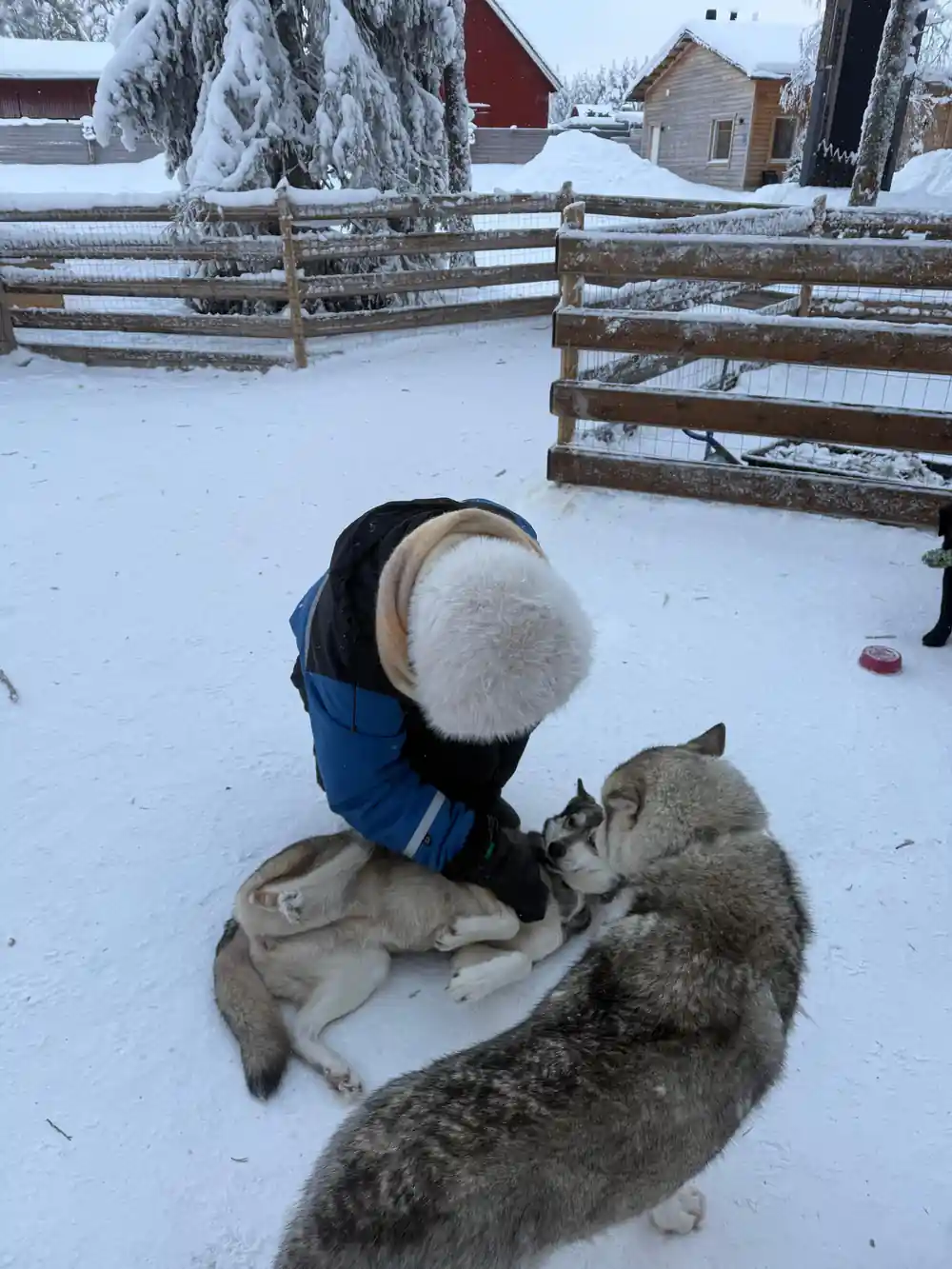
- These are gentle, working dogs accustomed to close contact with visitors. Husky petting is part of your experience, and handlers ensure interactions remain comfortable for both you and the team.
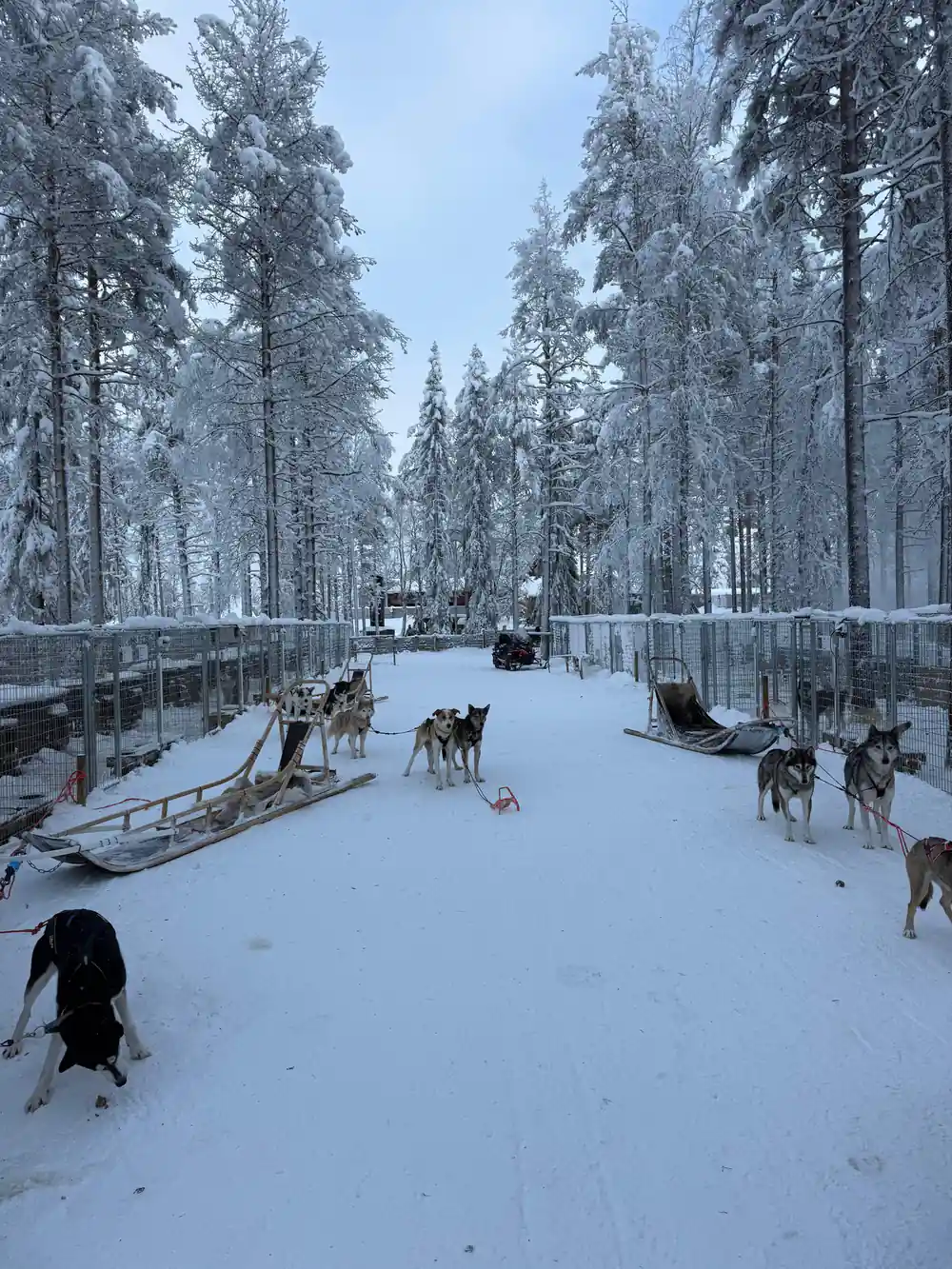
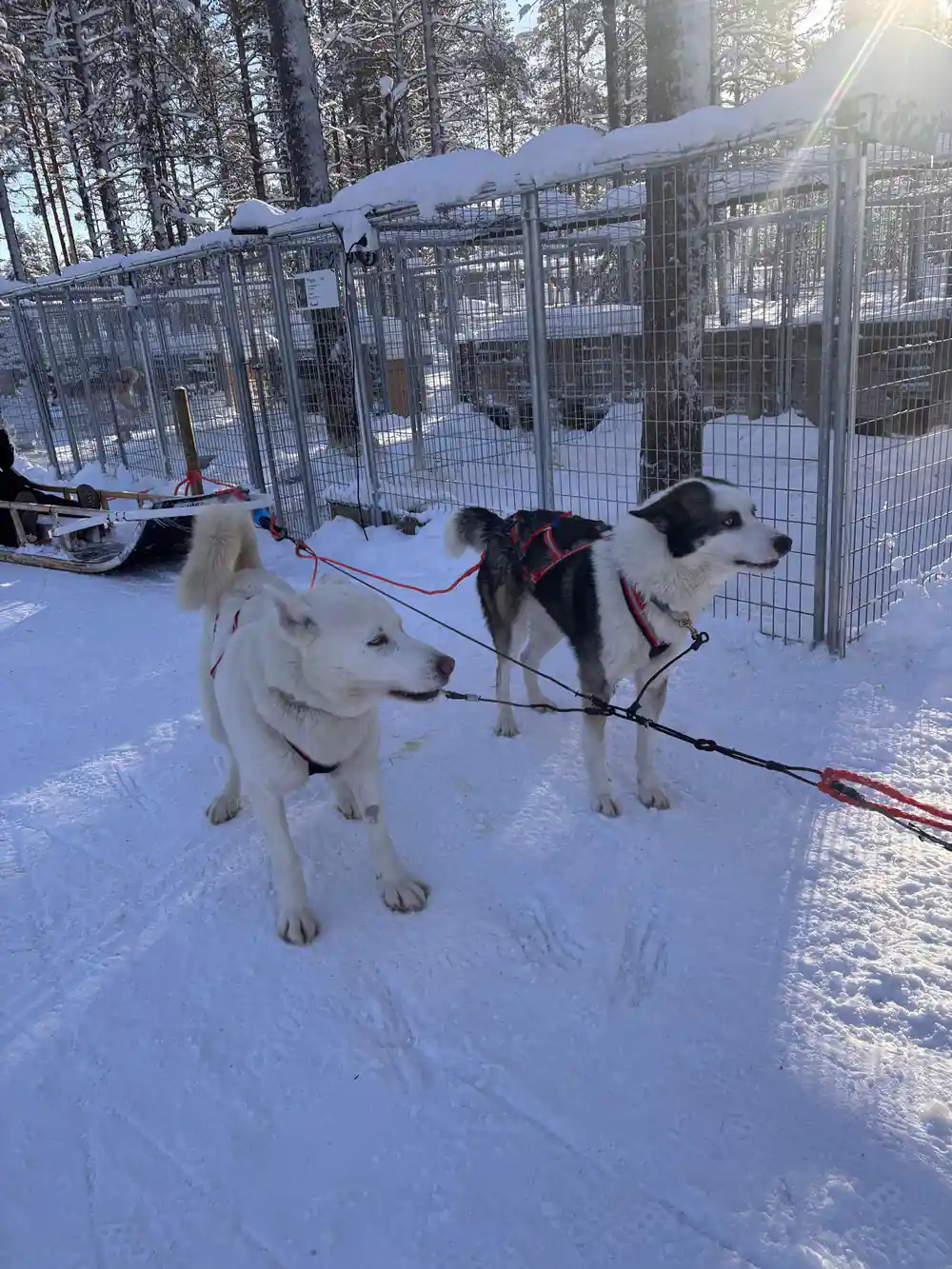
- If harness lines become twisted during the ride, guides are present to quickly untangle and reset them so you can continue without delay or concern.
What happens if you fall off the sled
Falls from husky sleds are rare, but understanding how to stay safe means knowing how the sled is designed and how to react if you lose your footing. The sled has two runners with a basket platform between them where you stand, and your weight and grip on the handlebar keep you stable. If you do slip, the most important rule is simple: let go of the handlebar and nothing else. Do not try to grab the sled, the harness lines, or the dogs. Holding on can drag you forward or tangle you in the equipment. A clean fall lets you drop away from the sled's path, and the dogs will feel the change in weight and respond.
The sled itself will not stop immediately when a driver falls off. The team of huskies is trained to continue forward until they hear a command or feel the brake engage, so your first action after falling is to stay down and clear. The guides at Apukka train all drivers in this release reflex before the run begins. This pre-tour briefing covers the correct way to grip the handlebar so you do not lock your hands in panic, and how to distribute your weight so the sled stays balanced on gentle turns. Most people complete the 6 km ride without incident, and the trails are groomed to reduce obstacles that might cause you to slip.
Can the sled tip over on a bend
Sled design and trail conditions work together to prevent tipping on curves. The sled sits low to the ground with a wide stance between the two runners, creating a stable base even when the team leans into a turn. The trails at Apukka are wide and banked gently, which means the ground itself slopes slightly toward the inside of each curve to help the sled stay upright, much like a highway off-ramp. The speed you are traveling at during the 6 km route is not high enough to create the forces that would cause a tip, and the huskies slow naturally as they approach tighter sections.
Your position on the runners also matters. Guides show you how to shift your weight slightly outward on a bend to counter the team's lean, a simple technique that takes seconds to learn and becomes automatic within minutes. If you feel the sled starting to lean at any point, the brake is within easy reach of your foot. Pressing it gently slows the team without jerking the sled sideways. In the years that Apukka has operated husky experiences, tipping during normal operation is not a reported safety issue, and the combination of sled engineering and trail design is the reason why.
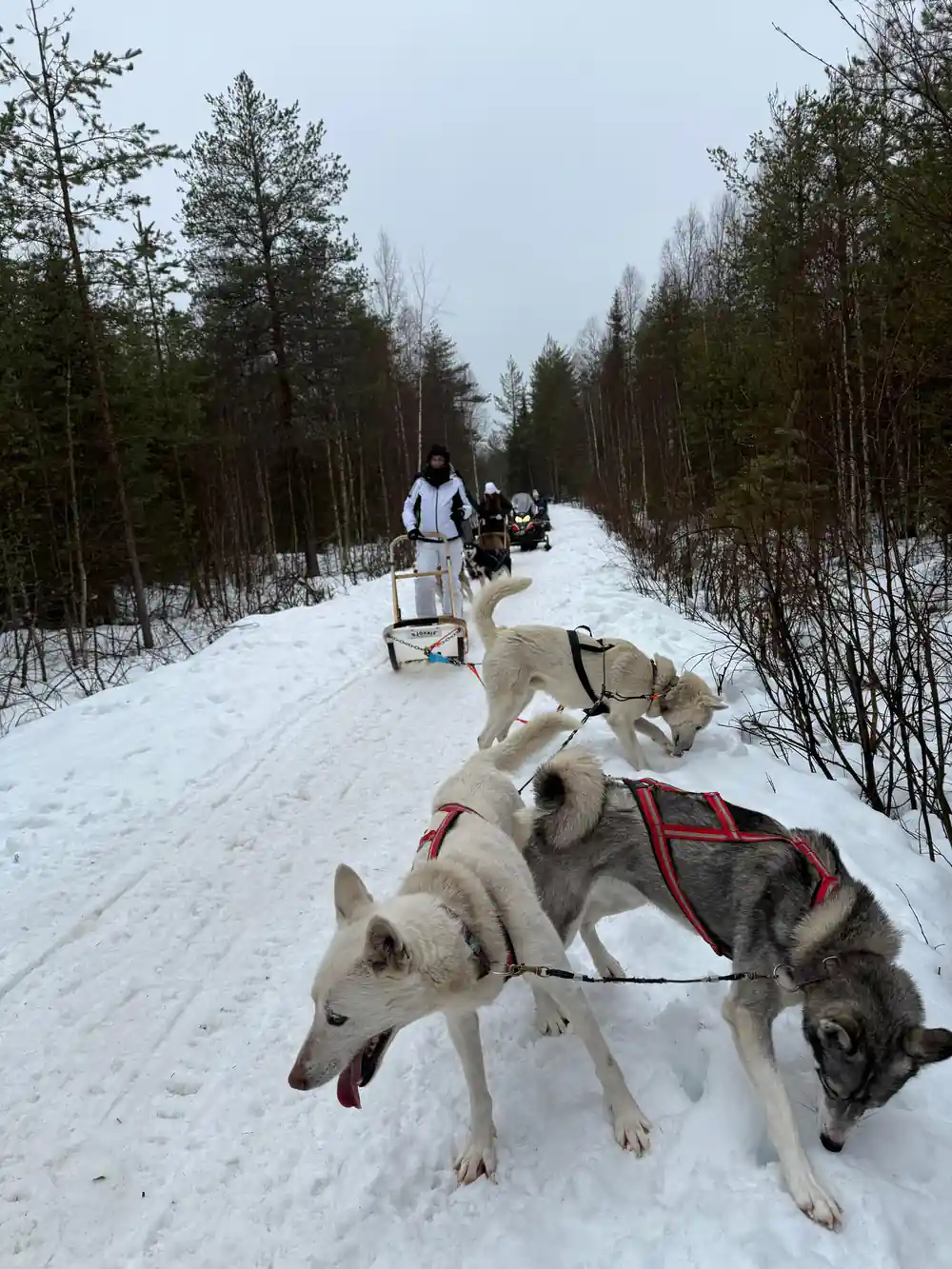
Handler steadies tangled lines with practiced ease
Will the husky team run off without a driver
A husky team will not run away just because you have fallen off or stepped back from the runners. These dogs are trained to respond to voice commands and to feel the weight and pressure of the brake on the runners behind them. If you are no longer on the sled, the sudden loss of weight is noticeable to the lead dog and the team, and their training tells them to either slow or wait for a command. Apukka's huskies are not untrained sprinters; they are working animals with years of experience pulling sleds with drivers, and they know the difference between a driver who is standing ready and one who is not.
That said, if a team does move forward without a driver, guides are positioned on the trail during the experience to see and respond. The 6 km route is set up so that guides can observe riders, and radio communication means any unusual situation is reported to base. A runaway team will either stop on its own as the dogs follow their training or will be intercepted by a guide. The dogs are not aggressive and will not panic; they will simply continue at a steady pace until someone takes control of the sled again. This is why all participants are briefed on the commands to use if needed, even though taking control yourself is the last resort.
Safety when petting and touching the huskies
Husky petting is part of the Apukka experience, and these dogs are accustomed to interaction with visitors. The huskies are friendly and have been socialized to accept touch before, during, and after the run. Before you pet any dog, wait for a guide to indicate which animals are ready for attention. Some may be focused on their harness or catching their breath after pulling, and a guide will steer you toward the dogs that are calm and interested in human contact. Pet along the body and sides rather than reaching toward the face, and keep your movements gentle and deliberate.
The huskies at Apukka are working dogs, not house pets, and they have their own space and boundaries. A guide will show you how to approach each dog and where it is okay to touch. Children are always supervised during petting, and an adult should be beside them. The dogs may eat snow or shake themselves while you are nearby, which is normal behavior and not a sign of aggression. If a dog moves away from you, respect that by stepping back. The petting time is built into the 3h30 duration so there is no rush, and guides will ensure that both you and the dogs have a calm, positive interaction.
6 km
Help is within minutes of any point on the 6 km trail, so you're never far from assistance.
What guides do if harness lines tangle
Harness line tangles happen occasionally during a run, usually when a team is starting up or making a sharp turn, and guides are trained to untangle lines quickly and safely. If lines twist or cross, the sled may pull unevenly or the team may slow until the problem is fixed. A guide will stop your sled, check the positioning of each dog and each line, and work to free any knots or loops. The team stays calm during this process because the huskies are used to stops and adjustments. You will be asked to hold the sled still or apply the brake gently while the guide works, a task that takes only a few minutes.
Prevention is built into how the dogs are harnessed before you ever leave for the trail. Guides check every dog's harness and line before departure, ensuring that nothing is twisted or loose. If a tangle does occur during the ride, it is usually minor and does not interrupt the 6 km route significantly. Larger tangles are rare because the trails are designed with wide turns and clear paths, and because experienced guides lead and monitor each group. If a tangle occurs, the guide will communicate with the base camp by radio, and you will continue once the lines are sorted, so delays are minimal.
How quickly help reaches you on the trail
Help arrives on the trail faster than you might expect, because guides do not work in isolation. During the husky experience, guides monitor each group, and base camp stays in radio contact throughout the 6 km route. If you need assistance, you can flag a guide by voice or by stopping your sled and waiting. Guides are positioned to see and hear riders within minutes, and radio communication means that base camp knows your location and situation almost immediately. For medical emergencies, the guides are trained in first aid, and the proximity of Apukka Resort means that professional help can reach the trail quickly if needed.
The 3h30 duration includes time for a safety briefing, petting, and a hot drink, which means you are never far from the resort facilities for a long stretch. The trails are groomed and maintained, and guides walk or ride alongside groups to watch for problems. If you feel unwell or need to stop for any reason, there is no penalty for asking a guide to help you back to the resort. The experience is designed so that discomfort prompts action, not silence. Apukka has operated husky tours for years with a strong safety record, which reflects the combination of guide training, radio systems, and trail design that keeps help close.
Options if you cannot continue partway through
If you reach a point during the 6 km ride where you are too tired, cold, or uncomfortable to continue, you can stop and request assistance from a guide. There is no obligation to complete the full distance, and guides are instructed to listen to your concerns and offer options. A guide can slow your team and return with you to the resort, or can arrange for another member of the group to help you finish at a relaxed pace. The winter clothing provided, including thermal overalls, thermal boots, and mittens, is designed to keep you warm, but if you are still cold, a guide can help you back early so you can warm up indoors with the hot drink included in the tour.
The 3h30 timeframe is realistic for most people in reasonable fitness, but the guides adjust the pace and route based on the group's comfort. If you have a health condition, injury, or concern about your ability to complete the experience, tell the guide during the pre-tour briefing. Guides can modify the route, reduce the distance, or provide extra breaks without canceling your experience entirely. Transfers from Rovaniemi city center or Santa Claus Village to Apukka Resort are included, so getting back is not a separate expense or logistical problem. Your safety and comfort are the priority, and guides have the flexibility to adapt the day to ensure you have a positive time.
Ready to Take the Reins? Book Your Husky Adventure
from US$253Reserve now & pay later
You lose balance
Sliding from the runners into snow
Your weight shifts on a turn. You tip sideways off the sled into deep snow. The impact is soft. You are unhurt and conscious.
The team continues forward without you
Huskies are trained to run. They do not stop when a driver falls. The sled moves ahead on the trail, still under control and visible.
Raising your hand to alert others
Other sleds in the convoy see you down. Drivers behind you are watching and ready. One sled operator spots the empty sled ahead.
The team ahead halts and returns
The lead sled stops your runaway team within moments. A guide or experienced driver circles back to your location in the snow.
Checking yourself before continuing
The guide helps you up and asks if you can go on. Your winter gear has protected you from cold and impact. You are ready.
Rejoining the convoy for the rest of the ride
You climb onto your sled. The guide gives you a steady start. The team moves forward again, and the adventure resumes.